
State of the Nation: Ria Lina
Series 4 / Episode 1
Episode 1: Rethinking Social Care: Visibility, Inclusion and the Social Model
“What happens when we stop asking what is wrong with someone and start asking what barriers we have put in their way?”
In this episode of State of Our Nation, Kari Gerstheimer is joined by comedian Ria Lina for a wide-ranging conversation about disability, neurodiversity, social care and the way society responds to difference.
Ria brings a unique perspective to the conversation, drawing on her experiences as a parent, comedian and advocate for greater inclusion. Together, Kari and Ria explore what the social model of disability can teach us about designing better services, why social care needs to be more visible in everyday life, and what it would mean to build a society around people's diverse needs rather than expecting people to fit into existing systems.
Looking beyond the individual
One of the central themes of the conversation is the social model of disability.
Ria describes how the environments we create can themselves disable people. Stairs, for example, may work well for many people, but create barriers for wheelchair users.
Rather than asking what is “wrong” with someone, we should ask what barriers society has created around them.
As Ria explains, society is often designed around what is considered “normal”, leaving anyone who does not fit that norm to navigate systems that were not designed with them in mind.
The challenge is not simply to make adjustments for people, but to rethink the systems themselves.
Designing with people, not for them
That idea leads naturally into the importance of co-production.
Andy McCabe, reflecting on the conversation, highlights how often services and environments are designed based on assumptions about what people need, rather than through meaningful involvement with the people who will actually use them.
Whether it is an inaccessible toilet, a poorly designed building or a social care system that restricts someone's choices, the same problem can emerge: decisions are made without the people affected being involved from the beginning.
True co-production means bringing people into the process from the very start—not presenting them with a finished plan and asking for their views.
As Andy puts it, if you start building something without the right people involved, there are only so many directions you can go once the foundations are already in place.
For social care reform, this means people who draw on care and support need to be involved in shaping the system from the ground up.
Social care is about more than old age
The episode also challenges the tendency to think about social care primarily in terms of older people.
Social care supports people across the life course, including people with physical disabilities, learning disabilities and neurodivergence.
For many working-age adults, good social care is what makes it possible to work, volunteer, maintain relationships, participate in the community and live independently.
But, as Kari and Andy discuss, there can be significant barriers to achieving this.
Someone may want to work, for example, but find that the support they receive does not fit around their working life. Others can find themselves financially worse off when they start earning because of the interaction between social care charges, benefits and other forms of support.
The message is that employment and contribution should be opportunities—not another source of pressure or disadvantage.
Valuing care and the people who provide it
The conversation also turns to the value we place on care work.
Ria argues that care workers, teachers, nurses and other essential workers are often undervalued despite the enormous contribution they make to society.
This is not only about pay, it is also about status, recognition and the flexibility to make care work a meaningful career.
A system built around possibility
Perhaps the strongest message from the conversation is the need to move from a model of social care based on restriction and risk towards one based on possibility and enablement.
Andy uses the example of a wheelchair. It can be viewed as something restrictive, or it can be understood as a tool that enables someone to move around, work, socialise and participate in everyday life.
But that only works if the world around the person is designed to support it.
The same principle applies to social care.
Good support should not simply keep people safe. It should help people live the lives they want to lead.
That means greater choice and control, meaningful opportunities to contribute, stronger communities and systems designed around people's actual lives.
As Ria puts it, the three things that need to change are integration, visibility and humanity.
A moment to act
The conversation comes at an important moment for social care, with Baroness Casey's independent commission and its Big Conversation creating an opportunity for people across the country to have their say about the future of care.
Kari and Andy highlight the importance of ensuring that this conversation recognises social care as more than a service for older people. It is a fundamental part of all our lives, supporting people to eat, wash, dress, work, see friends, participate in their communities and live as independently as possible.
Social care should not be treated as a nice-to-have.
It is about people's rights, dignity and ability to live a good life.
The challenge now is to build a system that is designed with people, not for them—and that sees difference not as a problem to be managed, but as something society should be designed to accommodate.
The latest episode of State of Our Nation featuring Ria Lina is out now.
This episode is followed by In Conversation with Andy McCabe.
Listen to the episode and join the conversation about what social care could look like if we designed it around all of us.
You can find the series on Spotify , Apple Podcasts, or listen to each episode on our website. Just click on the link to the right.
Find out more about Social Care Future here
For information on The Big Conversation on Care
Use AccessAva, our online digital service to find free social care resources and legal support.
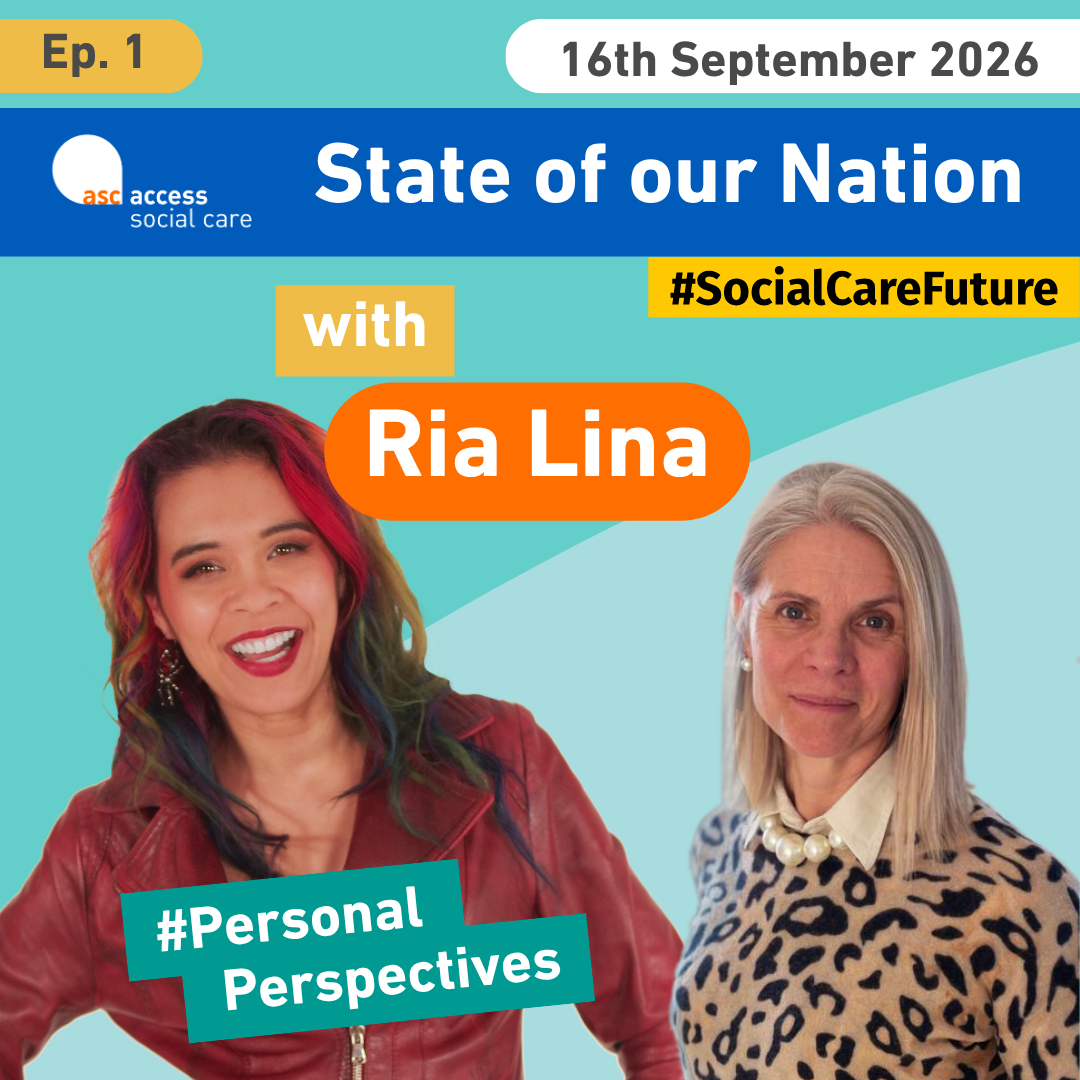
Promo graphic of Kari and Ria Lina for State of our Nation Podcast
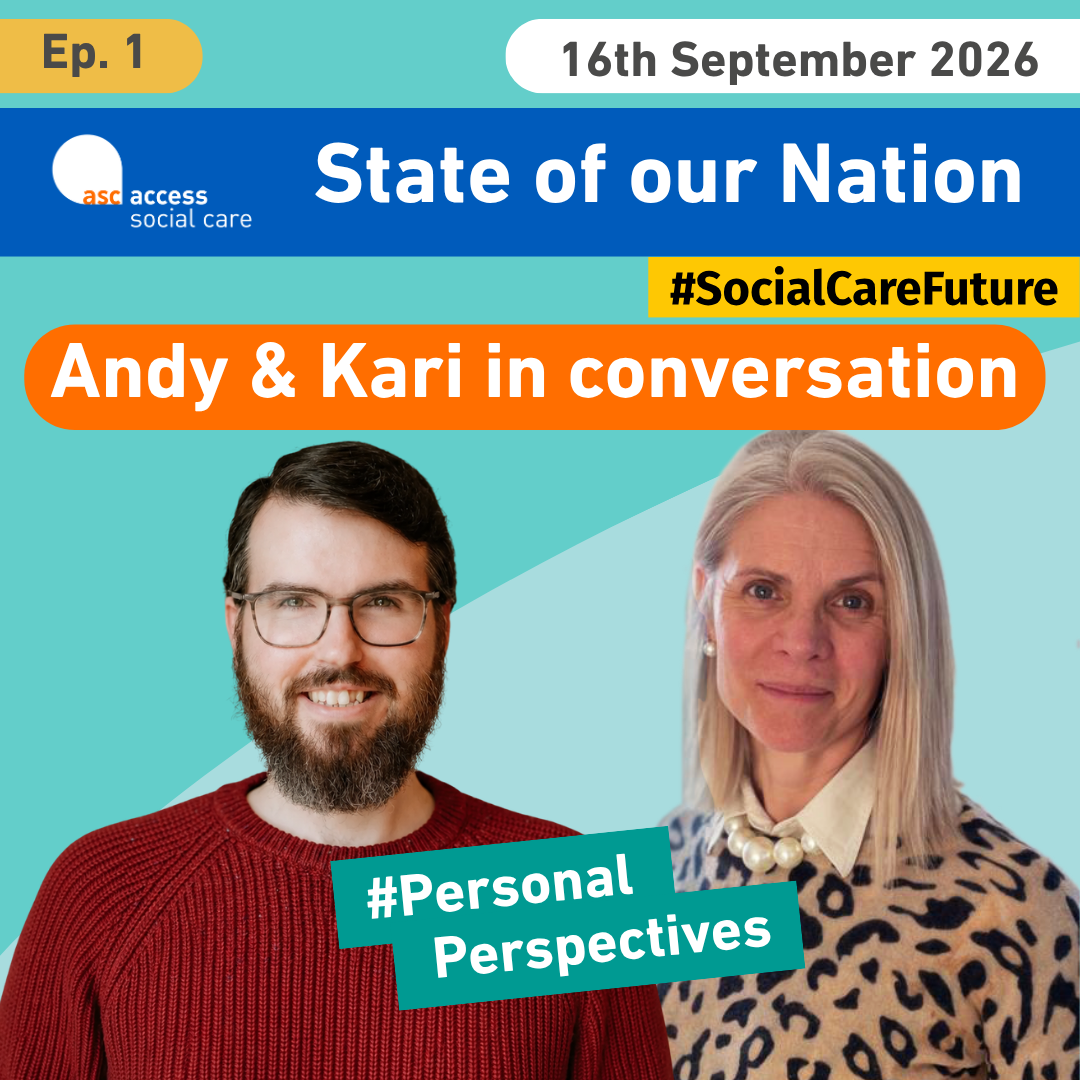
Promo graphic of Kari and Andy for State of our Nation Podcast
Listen on Spotify.
Listen on Apple Podcasts.