
State of the Nation: Sonia Sodha
Series 4 / Episode 2
Episode 2: From Being Kept Alive to Living a Life
What would it take to build a social care system that helps people live full, dignified and ordinary lives?
In the latest episode of State of Our Nation, Kari Gerstheimer is joined by columnist and author Sonia Sodha to explore what needs to change in social care — from how we describe it, to how we fund it, and how we value the people who provide it.
Together, Kari and Sonia explore why social care remains so poorly understood, why working-age disabled people are often missing from the public conversation, and what a fairer system could look like.
Social care should make ordinary life possible
One of the challenges Sonia identifies is that social care is still a term that many people struggle to understand. Yet behind the terminology is something fundamental: the support people need to live with dignity.
For Andy McCabe, who reflects on the conversation with Kari in the accompanying In Conversation episode, this means moving away from thinking about social care simply as a set of tasks.
The purpose of those tasks is not simply to keep someone safe or alive. It is to enable people to live lives of their choosing — in their own homes, in their communities, maintaining relationships and doing the things that matter to them.
As Andy puts it, there is an important distinction between “being kept alive” and “living a life.”
A system that works for all of us
The conversation also turns to one of the biggest questions facing social care: who should pay for it?
Sonia argues for greater collective responsibility, drawing a comparison with the NHS. Rather than people being left to shoulder the costs of care largely on their own, she believes there should be a clearer, needs-based entitlement to support.
But questions of collective funding also raise questions of fairness — particularly between generations and between different parts of the country.
Kari and Andy discuss how younger generations can feel economically disadvantaged, while also recognising that social care is something that could benefit all of us at different points in our lives. The challenge is to create a system where responsibility is shared in a way that feels fair, taking account of differences in income, wealth, housing and circumstances.
From managing decline to living well
Sonia is clear that the challenge is not simply about putting more money into the existing system. It is also about changing the way we think about care.
Too often, she argues, social care is focused on managing risk and decline rather than enabling people to have flourishing, fulfilling lives.
That means thinking differently about what a good social care system is actually for — and what we should expect from it.
For Andy, this is where political courage matters. Rather than continually applying small fixes to individual problems, he argues that starts with people being able to have purpose, relationships and connection to their communities.
Valuing care as skilled work
Another major theme is the workforce.
Sonia challenges the idea that social care is low-skilled work. She argues that it is highly skilled, but has historically been undervalued and underpaid — in part because caring work has traditionally been associated with women's work.
Changing social care therefore means changing how we value the people who provide it.
That means better pay, greater recognition of the skills involved, and greater respect for care workers. It also means having an honest conversation about what a properly resourced social care system actually costs.
As Sonia points out, human-to-human care cannot simply be replaced by technology. Care can be a skilled, fulfilling and meaningful career — but we need to start treating it that way.
A moment to act
With the Casey Commission and wider national conversation bringing renewed attention to social care, this episode asks us to think beyond short-term fixes.
What would it mean to build a system based on need rather than age? To share the risks and costs of care more collectively? To value care workers properly? And, ultimately, to see social care not as something separate from the rest of society, but as part of the infrastructure that enables people to live good lives?
There are difficult questions about funding, fairness and priorities. But the conversation between Sonia, Kari and Andy makes clear that there is also an opportunity to rethink what social care is for.
The latest episode of State of Our Nation, featuring Sonia Sodha, is out now.
This episode is followed by In Conversation with Andy McCabe.
Listen to the episode and join the conversation about what social care could look like if we designed it around all of us.
You can find the series on Spotify , Apple Podcasts, or listen to each episode on our website. Just click on the link to the right.
Find out more about Social Care Future here
For information on The Big Conversation on Care
Use AccessAva, our online digital service to find free social care resources and legal support.
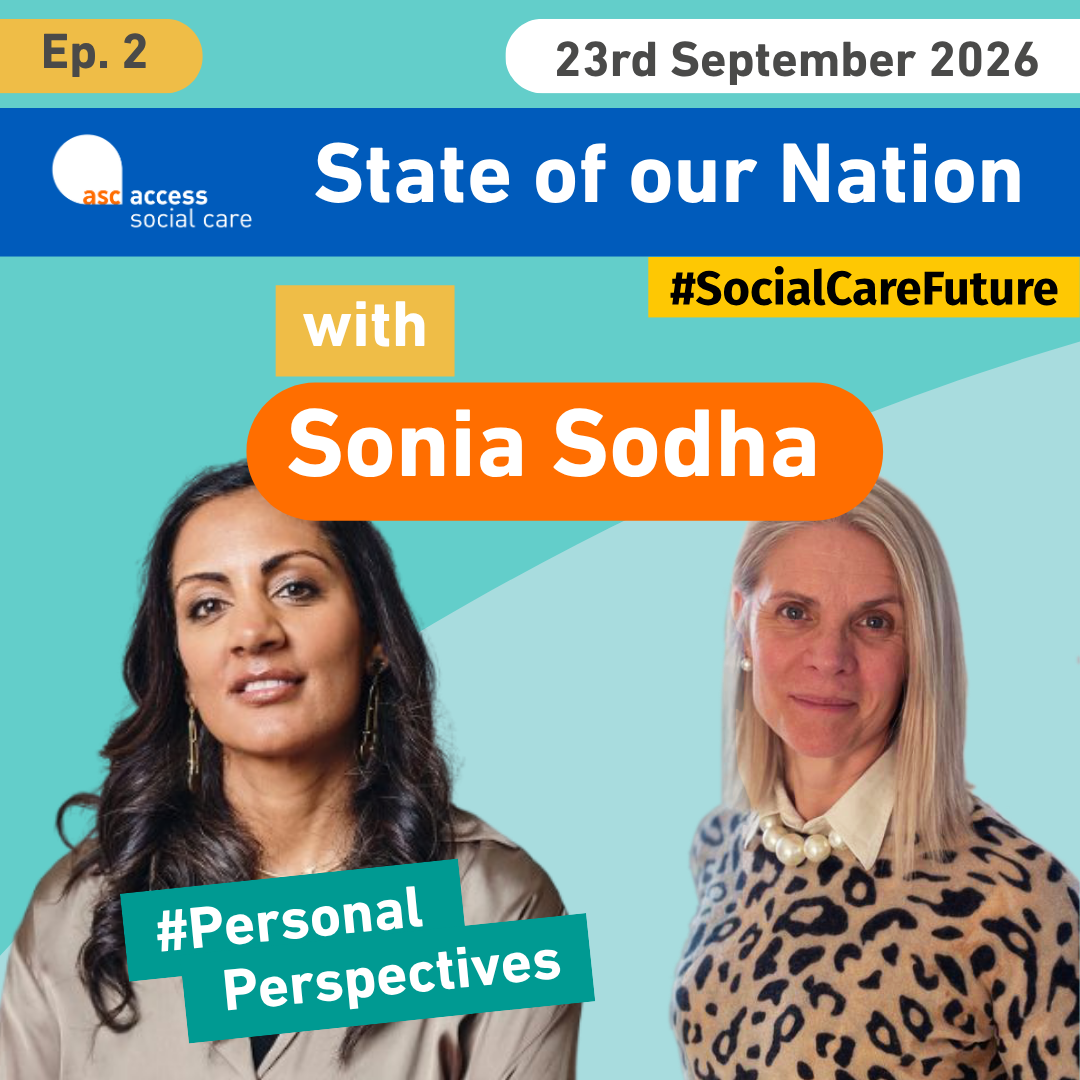
Promo graphic of Kari and Sonia Sodha for State of our Nation Podcast
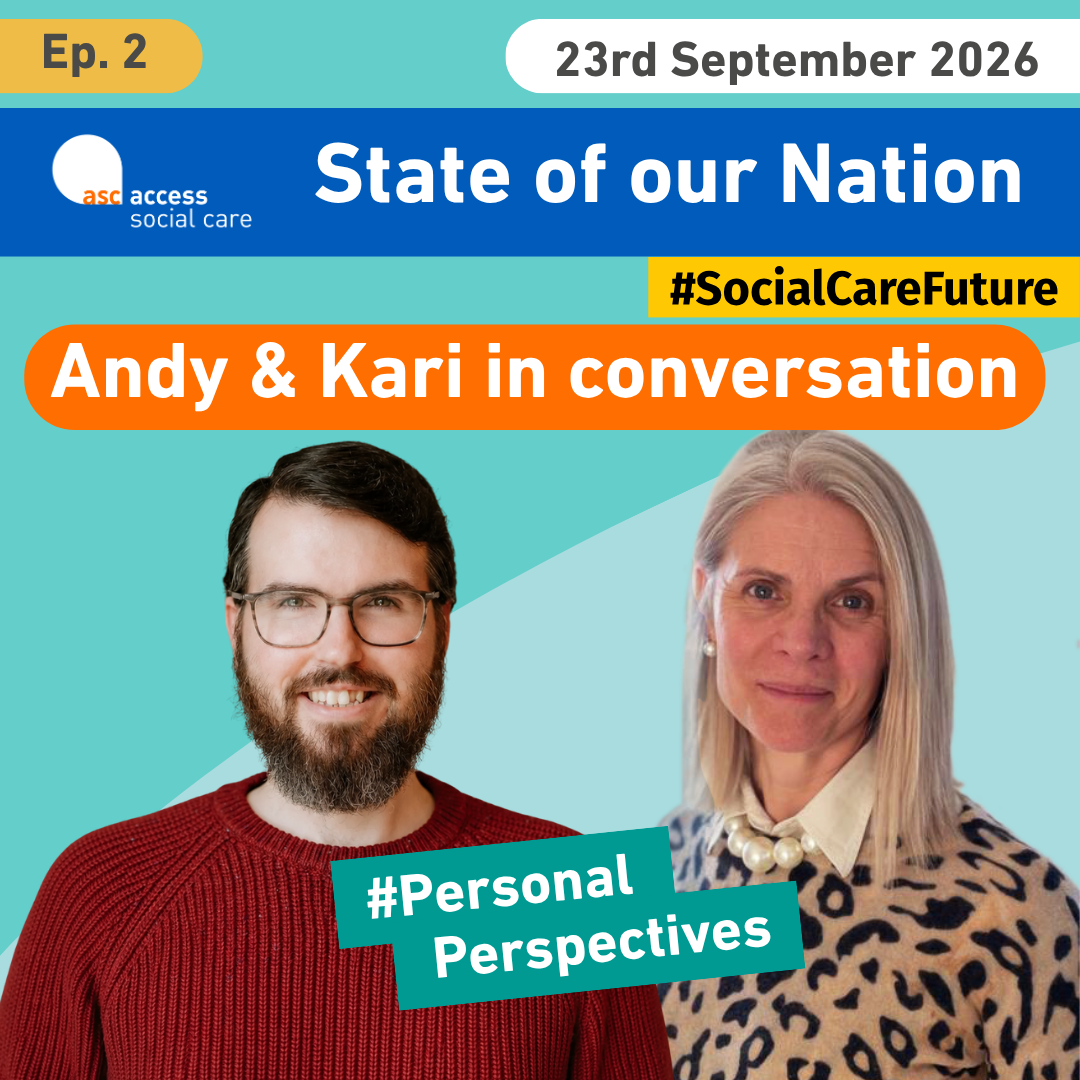
Promo graphic of Kari and Andy for State of our Nation Podcast
Listen on Spotify.
Listen on Apple Podcasts.