
Challenging Assumptions: Securing Life Changing Communication Technology for Sara
In December 2025, our legal team concluded a case supporting Sara, a young woman who sustained a traumatic brain injury at the age of 16 and has since been left with complex health needs, including profound communication challenges. Sara is unable to communicate through speech, writing, or gesture, and can only indicate “yes” or “no” through blinking, which significantly limits her ability to express needs and participate in conversations.
She has a care package funded by Continuing Healthcare (CHC). Her communication needs were regarded as ‘high’, but her condition was considered so severe that it was initially assumed she would not benefit from any Augmentative and Alternative Communication (AAC) tools.
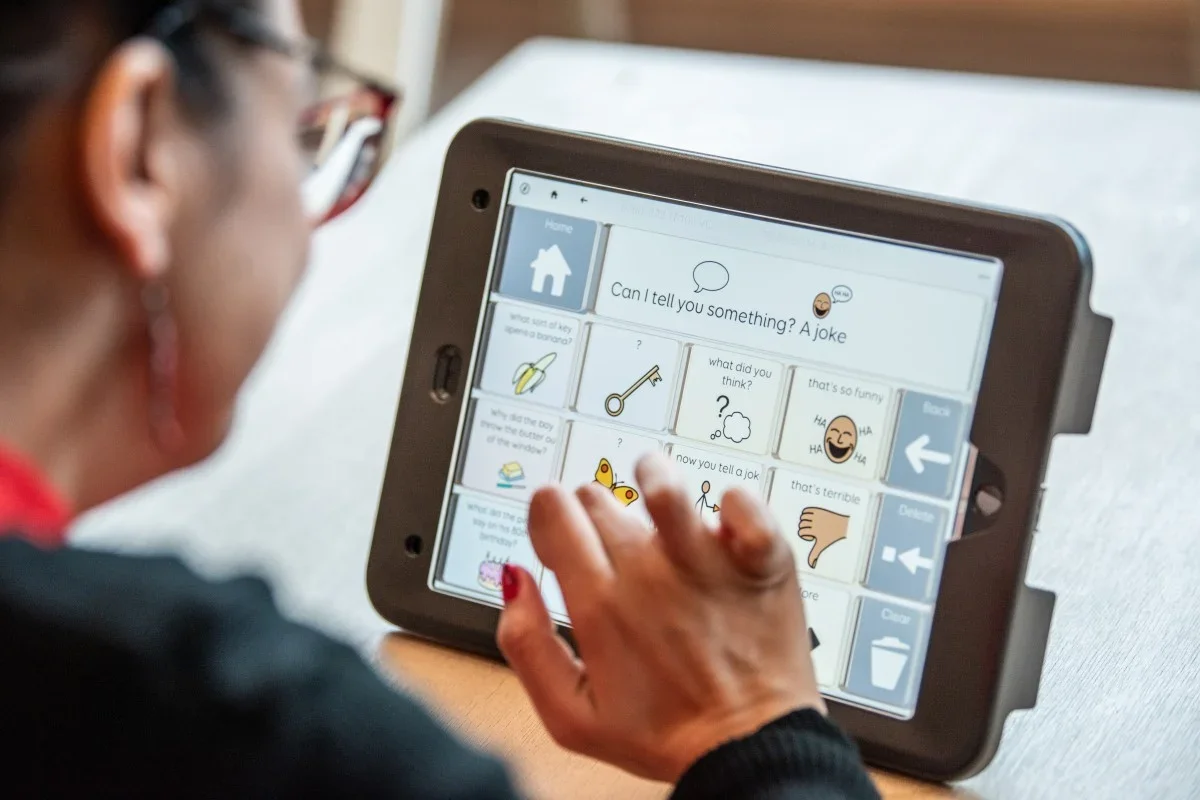
Using Smartbox Grid technology
AAC refers to a range of tools, technologies and strategies used to support people who cannot rely on speech alone to communicate. AAC can include paper-based methods such as symbols, communication boards or books, as well as electronic solutions such as speech-generating devices or eye gaze technology.
AAC is not about replacing a person’s voice or abilities, but about enabling them to express choices, needs, thoughts and personality in a way that is meaningful to them.
Challenging assumptions
For individuals with profound or complex communication difficulties, access to appropriate AAC can be fundamental to dignity, autonomy, relationships and participation in everyday life, and should be considered as part of meeting assessed health and care needs rather than as an optional add-on.
Navigating the legal path to funding
Our member organisation, Smartbox, provided a three-month trial of their Grid Pad 13 AAC device and Grid software with eye gaze technology, enabling Sara to explore an alternative method of communication and develop skills with the technology. The trial demonstrated that, when provided with appropriate tools and support, Sara was able to communicate with others, express her needs, and engage more meaningfully with those around her. Importantly, the trial provided clear evidence of Sara’s capabilities, helping to challenge previous assumptions about what she could achieve.
Despite this, Sara was not eligible for the specific NHS funding that is provided for AAC equipment (sadly only around 10% of people who could benefit from AAC meeting the criteria), and no charitable funding was available.
Recognising Sara’s right to be heard
Our legal team wrote to CHC to request funding for the AAC device as part of Sara’s Continuing Healthcare package, on the basis of their duties under the National Framework. Although CHC were initially hesitant, they agreed to fund the rental of the device while alternative funding routes were explored. Once it was confirmed that no other funding was available, CHC accepted responsibility and agreed to purchase the device, ensuring Sara’s ongoing access to a vital communication tool.
Ensuring no one is left without a voice
Access to AAC also had a wider impact on how Sara’s needs and potential were understood by professionals. Evidence gathered during the trial supported an application for an Education, Health and Care Plan (EHCP), which was subsequently granted. This enabled Sara to access a place at a specialist college, where she receives consistent speech and language therapy input alongside other therapeutic support. This educational placement has had a significant positive impact on Sara’s ability to develop her communication skills, including her use of eye gaze technology, and to participate more fully in learning and daily activities.
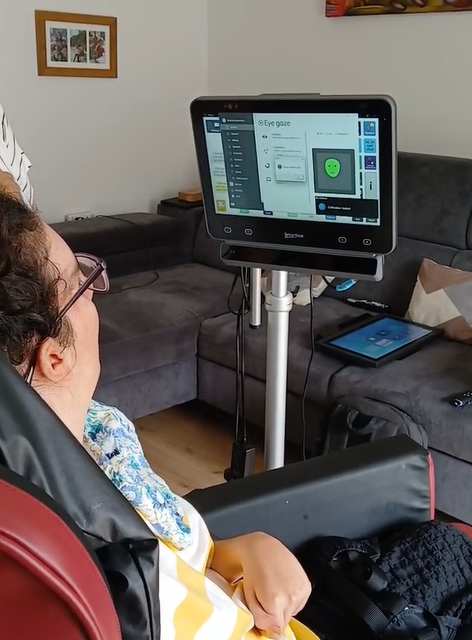
Sara using eye gaze technology
Reflecting on the case, Jess from Smartbox commented:
“As Assistive Technology Specialists, we meet so many people who, like Sara, can achieve more with consistent access to AAC, but no clear route to funding exists. Working with Access Social Care to explore the opportunities to secure access to the equipment and support individuals need (through the statutory routes available to them) has been a fantastic step forward in our mission to ensure no one is left without a voice.”
Gaining access to AAC provides an opportunity to develop communication and access skills and essentially live more independent and fulfilled lives."
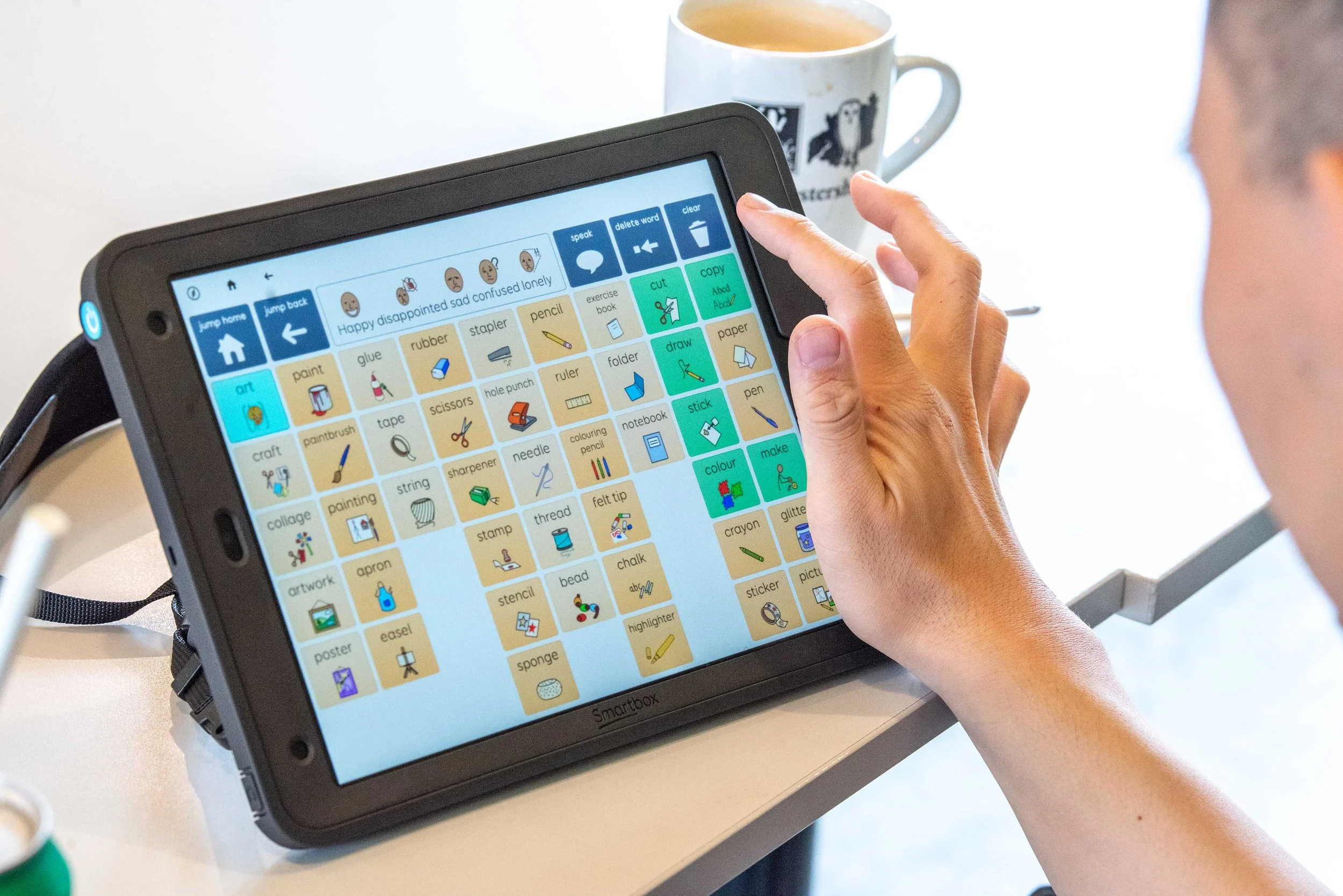
Eugene using a Talk Pad
Well done to Smartbox and our legal team for successfully resolving this issue.
If you have similar queries, please do get in touch on enquiries@accesscharity.org.uk